
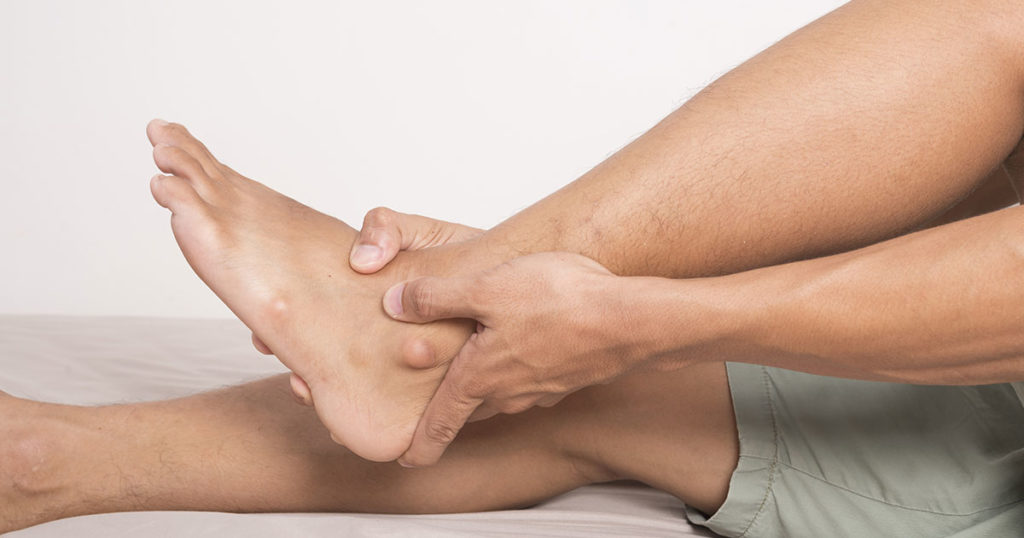
Will a gout attack cause you acute pain and cripple your daily activities? You can take effective preventative measures now, even if you have had a history of gout! Discover science-backed natural remedies that could ease a gout attack.
What is Gout?
Gout is the most prevalent form of inflammatory arthritis. Unfortunately, gout is associated with several chronic diseases and impaired quality of life.
Elevation of serum uric acid (UA) levels, hyperuricemia, is an essential prerequisite for the development of gout. As the blood uric acid levels rise and the normal threshold for uric acid is exceeded in body fluids, the formation and deposition of uric acid crystals occur in and around joints.1 These crystals then trigger an immune response and inflammation in a joint.
How Common is Gout?
In the USA, 3.9% of adults, or 12 million Americans, have gout. The number of people suffering from gout attacks has increased in recent years. Gout affects an estimated 55.8 million people globally.2
The majority of patients experience a second acute gout attack within one year of the first episode.3 Stressful events, alcohol, drugs, or another illness can trigger a gout attack in susceptible persons.
What are the Symptoms?
Gout may present as an acute attack of severe pain and inflammation affecting the peripheral joints. The buildup of sharp uric acid crystals can lead to
- pain
- swelling
- redness
- heat,
- stiffness
Gout can affect finger, elbow, knee, heel, ankle, and wrist joints. The big toe and finger are the most common sites in which gout occurs.3
Low-grade fever, chills, and malaise may be present during acute gout attacks.
Deposits of uric acid (called tophi) can also form lumps under the skin. Then, too, kidney stones can form in the kidneys from uric acid crystals.
Where Does Uric Acid Come From?
Uric acid (UA) comes from the breakdown of substances called purines. Purines are found in all of your body’s tissues. They are also in many purine-containing foods, such as liver, meat, dried beans and peas, and anchovies. Normally, uric acid dissolves in the blood. It passes through the kidneys and out of the body in urine.
Uric acid accumulates in the blood when the body increases the production of uric acid, or the kidneys do not get rid of enough uric acid, or if a person eats too many foods high in purines. If uric acid stays chronically elevated, uric acid crystals may form in joints and trigger inflammation. As a result, gout develops. Not everyone who has elevated uric acid will develop gout. They will develop other problems.
Abnormality of blood lipids (elevated cholesterol, or high LDL, or triglycerides) is a risk factor for high uric acid levels.
What Other Problems with High Levels of Uric Acid?
We do need a certain amount of uric acid. It is actually an antioxidant. Uric acid has excellent antioxidant capacity. It can be responsible for as much as 2/3 of the total plasma antioxidant capacity.4
When the level of uric acid is chronically elevated, problems like gout and kidney stones increase. Uric acid levels above 7.0 mg/dL are a risk factor for gout development.
Probably, most individuals with any chronic degenerative diseases, such as obesity, diabetes, and kidney disease, would be wise to have their uric acid level tested. Why? Elevated uric acid levels usually predict or may reveal other conditions such as kidney disease, diabetes mellitus, metabolic syndrome, cardiovascular disease, and inflammation.5.
Individuals with chronic kidney disease (CKD) are at increased risk for gout. Conversely, individuals with gout have increased risk of CKD.6 7 8
According to one study, the prevalence of hyperuricemia (elevated uric acid) among adult cardiovascular disease patients was 41.3%. Another study found that 69.1% of individuals with hyperuricemia also had coronary disease.9
High levels of uric acid increase the risk of high blood pressure. Either an excessive production of uric acid or a reduced clearance of uric acid, or both, causes the uric acid levels to rise. Elevated levels of uric acid impair the ability of the blood vessels to dilate, increasing blood pressure. It also pushes inflammation in the arteries, a major factor in the development of atherosclerosis.10
How Serious is Gout?
Individuals with gout frequently have other concurrent chronic conditions such as hypertension, chronic kidney disease, cardiovascular disease, obesity, diabetes, and hyperlipidemia, all of which have a significant adverse impact on public health. Elevated uric acid may be a factor in these co-existing diseases. 11.
Chronic kidney disease elevates uric acid and increases the risk of gout attacks. So, if you have gout attacks, have your health care provider check your fasting blood sugar, A1c, and run kidney functioning tests.12 As mentioned, accumulating evidence points to elevated UA as an independent risk factor for kidney dysfunction.13
What Are the Risk Factors of Gout?
Men are more prone to getting gout than are premenopausal women. Your genetics can also increase the possibility of gout attacks. If a family member is afflicted, then you may also experience the same sometime during your life.
Medical Conditions:
Diabetes, kidney disease, injury to a joint, infection, and rapid weight loss may increase one’s risk for gouty arthritis.
Metabolic syndrome (MetS) is characterized by at least three of the following: obesity, high glucose and triglycerides (blood fats), low HDL, hypertension, and inflammation. Individuals with metabolic syndrome often have increased production or reduced urinary clearance of uric acid. High triglycerides are linked to purine production, which accelerates uric acid production.
Increased UA has been seen in individuals with insulin resistance. In this condition, the cells do not respond efficiently to insulin.
Elevated blood fats (triglycerides) are also commonly seen in individuals who have insulin resistance.
Beverages:
Consumption of sweetened sodas and drinks, especially with high fructose corn syrup, has been linked to an increased risk for gout. Fructose leads to more production of uric acid.14 Juice lovers, listen up. Consuming orange juice can also increase one’s risk.15
However, fructose, as it is packaged in fresh whole fruit, poses no harm because it is loaded with fiber and beneficial phytochemicals.
A dose-response meta-analysis showed that a one serving/week increment in artificially sweetened beverages was associated with a 4% higher risk of gout.16
Moderate, regular, or heavy use of alcohol, especially beer, has been linked to an increased risk for gout. Beer intake is an independent factor of elevated uric acid, as it is rich in high-quality purine. Alcohol consumption increases uric acid production and interferes with the removal of uric acid from the body.
Culprit Medications:
The regular use of aspirin and the vitamin niacin increases the risk of gout. Diuretics are important medications that increase the output of urine and help with hypertension, congestive heart failure, and edema, but they can increase uric acid excretion through the kidneys.
Environmental Factors
Environmental exposures, including lead exposure, air pollution, temperature fluctuations, and mental stress, have been found to trigger flares.17
What Dietary Factors Increase the Risk of Gout?
A healthy plant-based diet is ideal. Why? Most meats are high in purines. Purines in red meat are linked to elevated uric acid and gout attacks. Chicken breast with skin and lamb have higher purine contents. Organ meats such as heart, liver, kidney, and thymus have the highest purine content of any foods,18 The more meat eaten, the higher the levels of uric acid.
A twelve-year study of 47,000 men conducted by Hyon Choi, MD, compared the effects of dietary intake of purine-rich foods and risk of having gout attacks. He reported that higher levels of meat and seafood consumption are associated with an increased risk of gout. In this study, higher consumption of dairy products seemed to decrease the risk of gout. Consumption of purine-rich vegetables was not associated with gout.19
Some vegetables contain high quantities of purine (e.g., asparagus, mushrooms, spinach, green peas, and cauliflower), but there is little data to suggest that these purine-rich foods contribute to hyperuricemia or gout risk. A meta-analysis of 19 studies found no links between consumption of high-purine vegetables and hyperuricemia.20 20 21
What is Gout-Prevention Nutrition?
A healthy, whole-food, vegetarian diet reduces the risk of gout. It is linked to lower uric acid levels. In addition, a healthy vegetarian diet protects against gout through several other mechanisms. Plant foods contain phytochemicals that help uric acid to stay within normal range.22 A well-balanced vegetarian diet lowers the risk of cardiovascular diseases, type 2 diabetes, and chronic kidney disease.
You can also eat beans or lentils, which are moderately high in purines but are also a good source of protein.23 Individuals with hyperuricemia should not ingest a large amount of purine-rich food (for instance, veal, bacon, kid meat, mutton, turkey, pork, duck, goose, etc.) and limit (better yet, exclude) fish and meat intake.24
The low-sodium DASH Diet emphasizes fruits, vegetables, whole grains, and legumes. It excludes red and processed meats but includes low-fat dairy and fish. This diet is protective against gout, reduces saturated fats and total fat intake, decreases elevated uric acid levels, and lowers the risk for cardiovascular disease, which is a common comorbidity of gout.25
Fiber and high consumption of vitamin C-rich foods may help to protect us from gout.26 Vitamin C intake shows an inverse relation with uric acid.
Healthy Plant-Based Diet & Gout Comorbidities
Because hypertension, chronic kidney disease, diabetes, and cardiovascular diseases often accompany gout, the authors think that a well-balanced, predominantly whole plant food diet is the best option. Why? Studies show that healthful plant foods diets reduce the risks of these comorbidities and help improve them.27 28 29 30 31
What are Natural Treatment Options?
Early attacks usually get better within 3 to 10 days, even without treatment. Typically, a health care provider would prescribe nonsteroidal anti-inflammatory drugs (if there are no contraindications), which are usually sold over the counter. Colchicine is a medication that is designed to decrease uric acid deposits in the joints; however, it has serious side effects.
What About Cherries for Gout?
Studies show that cherry consumption may lower uric acid levels. Cherries combat inflammation. A study of 100 patients with recurrent gout found that taking 15ml/day of cherry juice concentrate for 4-6 months reduced several inflammatory markers. A greater than 50% reduction was also seen in the number of acute gout attacks for 92% of treated patients.32 So, cherries are worth a try.
Stay Hydrated with Water
Dehydration increases the risk of gout and its flare-ups. One study reported nearly a 50% reduction in gout flare risk in individuals consuming >8 glasses of water/day vs. those drinking only a couple glasses of water.33
Hydrotherapy for Gout
Unless you have diabetes, neuropathy, or a blood vessel disorder, you can apply a soft gel ice pack for 15 minutes every couple of hours during the first 48 hours of a gout attack.
Or, easier yet, place the gouty joint in cold water. Studies show that cold water immersion decreases pain and improves joint mobility during a gout attack.34
A warm and cool contrast foot bath can help with gout once the acute stage is over.35
You will need two buckets (galvanized are the best), a container of ice, a pitcher of hot water, a few towels, and a bath thermometer.
Procedure:
- Fill one bucket about 1/3 full of water at 102 degrees Fahrenheit. Fill the second bucket 1/3 full of cold water with some ice.
- Soak your feet in the warm water for 3 minutes. Then place your feet in cold water for 30 seconds.
- Repeat this series three times.
- Add hot water to the foot bath periodically to keep the water warm (not hot) and make the tub of cold water colder each time you place your feet in it. In other words, you want a sharp contrast.
- As a final step, plunge your feet in warm water.
Please note: if you have diabetes, poor sensation, edema in the lower leg or foot, atherosclerosis in the extremities (peripheral vascular disease), or an open sore, you must consult with a doctor before trying a contrast bath. Warm and cool contrast baths may help in these conditions, but do check with your doctor first!
Any Herbs that Could Help Gout?
Ginger has a strong anti-inflammatory effect on joints and can be regarded as a useful tool for the treatment of acute gouty arthritis.36. The shogaol (a ginger constituent) has strong anti-inflammatory and antioxidant effects and helps gout.37
Curcumin from turmeric reduces the inflammation from needle-shaped uric acid crystals.38. However, if one is taking medicine, it is essential to consult with one’s pharmacist before using ginger or any herb. Individuals with bleeding disorders should not use ginger or curcumin.
One interesting observation in conclusion: The same lifestyle measures–a healthy plant-based diet, eating in moderation, exercise, the use of pure water, and abstaining from alcohol and sugar– that help to prevent gout attacks are, in many aspects, the same measures that help to protect your kidneys and your heart!
Call to action: The Wildwood Lifestyle Center offers programs to help improve and reverse prediabetes, type 2 diabetes, metabolic liver disease, obesity, hypertension, high cholesterol, arthritis, and many other chronic diseases. Check us out!
Disclaimer: The information in this article is general and educational in nature. Wildwood Sanitarium, its entities, or authors do not intend this information as a substitute for proper diagnosis, treatment, or counseling from a qualified medical provider who knows the person’s medical history and laboratory work.
Copyright © by Wildwood Sanitarium, Inc. 2026
References:
- Roddy E. Epidemiology of gout, Arthritis Research & Therapy. 2010 www.ncbi.nlm.nih.gov/pmc/articles/PMC3046529/[↩]
- Cross M, Ong K, Culbreth G et al.
Global, regional, and national burden of gout, 1990–2020, and projections to 2050: a systematic analysis of the Global Burden of Disease Study 2021. The Lancet Rheumatology, 2024; 6, e507-e517. [↩] - Smith, R., US Pharmacist. The Diagnosis and Treatment of Gout. US Pharmacist, 2009:34(5):40-47[↩][↩]
- Roddy, ibid[↩]
- de Oliveira EP, Burini RC[↩]
- https://www.kidney.org/atoz/content/gout/patient-facts [↩]
- High plasma uric acid concentration: causes and consequences. Diabetol Metab Syndr. 2012 Apr 4; 4:12[↩]
- Card-Gowers J, Projected Health and Economic Burden of Comorbid Gout and Chronic Kidney Disease in a Virtual US Population: A Microsimulation Study. Rheumatol Ther. 2024 Aug;11(4):913-926. https://pmc.ncbi.nlm.nih.gov/articles/PMC11264668/ [↩]
- Rufe NB., Hyperuricemia and associated factors among adult cardiovascular disease patients at Salale University Comprehensive Specialized Hospital, Fitche, Central Ethiopia. PLoS One. 2025 Jun 24;20(6):e0325775. [↩]
- Kumrić M, Borovac JA, Kurir TT, Božić J. Clinical implications of uric acid in heart failure: a comprehensive review. Life (Basel). 2021;11(1):53. https://pmc.ncbi.nlm.nih.gov/articles/PMC7828696/ [↩]
- Avram Z1, Krishnan E. Hyperuricaemia–where nephrology meets rheumatology. Rheumatology (Oxford). 2008 Jul; 47(7):960-4[↩]
- Karis, E. Hyperuricemia, gout, and related comorbidities: cause and effect on a two-way street. South Med J. 2014 Apri: 107(4):235-41[↩]
- Avram Z1, Krishnan E. Hyperuricaemia–where nephrology meet rheumatology. Rheumatology (Oxford). 2008 Jul; 47(7):960-4[↩]
- Rho YH. The epidemiology of uric acid and fructose. Semin Nephrol. 2011 Sep; 31(5):410-9[↩]
- Choi, HK Fructose-rich beverages and risk of gout in women. JAMA. 2010 Nov 24:304(20):2270-8[↩]
- Ayoub-Charette S, Liu Q, Khan TA, et al. Important food sources of fructose-containing sugars and incident gout: a systematic review and meta-analysis of prospective cohort studies. BMJ Open 2019;9:e024171.[↩]
- Helget LN, Mikuls TR. Environmental Triggers of Hyperuricemia and Gout. Rheum Dis Clin North Am. 2022 Nov;48(4):891-906. https://pubmed.ncbi.nlm.nih.gov/36333002/ [↩]
- Helget LN, Mikuls TR. Environmental Triggers of Hyperuricemia and Gout. Rheum Dis Clin North Am. 2022 Nov;48(4):891-906. https://pmc.ncbi.nlm.nih.gov/articles/PMC10351897/[↩]
- Choi, HK. Purine-Rich Foods, Dairy and Protein Intake, and the Risk of Gout in Men, NEJM 2004 March 11(50):1093-1103[↩]
- Li R, Yu K, Li C: Dietary factors and risk of gout and hyperuricemia: a meta-analysis and systematic review. Asia Pac J Clin Nutr 2018, 27(6):1344–1356.[↩][↩]
- Jakše B, JUric Acid and Plant-Based Nutrition. Nutrients. 2019 Jul 26;11(8):1736. https://pmc.ncbi.nlm.nih.gov/articles/PMC6722549/ [↩]
- ChiuTina H.T. Vegetarian diet and risk of gout in two separate Volume 39, Issue 3. 2020. Pages 837-844, ISSN 0261-5614, https://www.sciencedirect.com/science/article/pii/S0261561419301293#bbib21[↩]
- Gout Diet: What’s allowed; what’s not. mayoclinic.org/…/in-depth/gout-diet/art-20048524[↩]
- Erick Prado de Oliveira. High plasma uric acid concentration: causes and consequences. Diabetol Metab Syndr. 2012; 4: 12[↩]
- Juraschek SP, Gelber AC, Choi HK, Appel LJ, Miller ER 3rd. Effects of the Dietary Approaches to Stop Hypertension (DASH) Diet and Sodium Intake on Serum Uric Acid. Arthritis Rheumatol 2016;68:3002-9. https://www.ncbi.nlm.nih.gov/pmc/articles/PMC5423545/ [↩]
- www.lifeextension.com, Gout and Hyperuricemia, 2015[↩]
- Miles FL, Lloren JIC, Haddad E, et al. Plasma, urine, and adipose tissue biomarkers of dietary intake differ between vegetarian and non-vegetarian diet groups in the Adventist Health Study-2. J Nutr. Published online February 15, 2019.[↩]
- Chauveau P, Koppe L, Combe C, Lasseur C, Trolonge S, Aparicio M. Vegetarian diets and chronic kidney disease. Nephrol Dial Transplant. 2019 Feb 1;34(2):199-207. [↩]
- Świątek, Ł., Jeske, J., Miedziaszczyk, M. et al. The impact of a vegetarian diet on chronic kidney disease (CKD) progression – a systematic review. BMC Nephrol 24, 168 (2023). https://bmcnephrol.biomedcentral.com/articles/10.1186/s12882-023-03233-y[↩]
- Wang TKroeger CMCassidy S, et al. Vegetarian Dietary Patterns and Cardiometabolic Risk in People With or at High Risk of Cardiovascular Disease: A Systematic Review and Meta-analysis. JAMA Netw Open. 2023;6(7):e2325658. https://jamanetwork.com/journals/jamanetworkopen/fullarticle/2807597[↩]
- McMacken M, Shah S. A plant-based diet for the prevention and treatment of type 2 diabetes. J Geriatr Cardiol. 2017 May;14(5):342-354. https://www.ncbi.nlm.nih.gov/pmc/articles/PMC5466941/ [↩]
- Jancin B. Cherry Juice Flowing in Gout Treatment Pipeline. Family Practice News. 2010[↩]
- Neogi T, Chen C, Chaisson C, Hunter D, Zhang Y: Drinking water can reduce the risk of recurrent gout attacks. In: ACR Annual Scientific Meeting: 2009; 2009: 16–21.[↩]
- Kurniasari MD, Monsen KA, Weng SF, Yang CY, Tsai HT. Cold Water Immersion Directly and Mediated by Alleviated Pain to Promote Quality of Life in Indonesian with Gout Arthritis: A Community-based Randomized Controlled Trial. Biol Res Nurs. 2022 Apr;24(2):245-258. [↩]
- Alternate Warm and Cold Therapy (AWCT) on Uricemia, Sleep, Pain, Functional Ability, and Quality of Life (USPFQoL) in Patients with Gout: A Path Forward. J Healthc Eng. 2022 Mar 9;2022:5471575. https://pmc.ncbi.nlm.nih.gov/articles/PMC8926540/ [↩]
- Sabina, EP. 6-Shogaol inhibits monosodium urate crystal-induced inflammation–an in vivo and in vitro study. Food Chem Toxicol. 2010 Jan; 48(1):229-35[↩]
- Grzanna R, Lindmark L, Frondoza CG. Ginger: An herbal medicinal product with broad anti-inflammatory actions. J Med Food. 2005;8:125–32. [↩]
- Chen, B., Li, H., Ou, G. et al. Curcumin attenuates MSU crystal-induced inflammation by inhibiting the degradation of IκBα and blocking mitochondrial damage. Arthritis Res Ther 21, 193, 2019[↩]