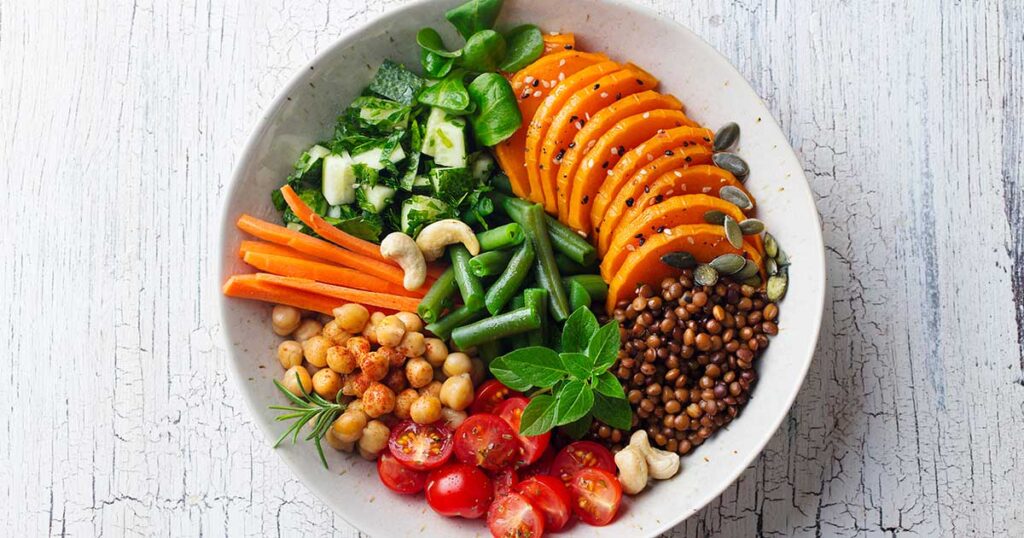
According to Harvard Medical School, a plant-based dietary pattern emphasizes greater reliance on plant-based foods, including whole foods in their natural or minimally processed state. It further promotes adherence to such a dietary pattern, which reduces the risk of developing severe chronic conditions.1 Mediterranean, vegetarian, and vegan diets are some examples.
Benefits from Healthful Plant-Based Diets
You might be concerned cardiovascular disease, or have a family history of cancer. Perhaps you’re looking to reverse type 2 diabetes or coronary artery disease, or manage better hypertension or metabolic dysfunction-associated steatotic liver disease (MASLD or fatty liver disease).
A healthful plant-based diet can protect you from some infectious diseases. For example, a healthful plant-based diet is associated with 73% lower rate of moderate-to-severe COVID-19 infection, but an unhealthy plant-based diet increased the risk.2
A large study found that among individuals who consumed healthy plant foods, those in the highest quintile experienced a risk of hospitalization due to respiratory infection that was 16% lower than those in the lowest quintile.3 This did not hold true for those who ate an unhealthy plant-based diet.
Alternatively, you may be interested in adopting a healthful plant-based dietary pattern because of its potential environmental benefits. Whatever your motivation, here is what you need to know before embarking on this life-changing adventure.
Get Set, Get Ready!
If you have any medical conditions such as gastrointestinal, autoimmune, metabolic or musculoskeletal disorders, food allergies, malabsorption, anemia, epilepsy, kidney disease, eating disorders, and so forth, please work with a plant-based Dietician/Dietitian or Nutritionist or Certified Nutrition Specialist (CNS) to plan your menus. This approach can help reduce the risk of nutrient inadequacies and nutritionally imbalanced meal patterns that may result from restrictive dietary practices, particularly when appropriate plant-based alternatives are not incorporated to meet essential nutrient requirements.
Food equipment: good blender, Instant pot or electric pressure cooker, wood cutting board, steamer, masticating/slow juicer (optional)
Staples: Legumes, nuts, seeds, whole grains (brown or wild rice, quinoa, steel-cut or old-fashioned oats, barley,
wheat berries, bulgar, buckwheat, millet)
Herbs: onions, leeks, garlic, basil, cumin, turmeric, ginger, oregano, thyme, sage, rosemary, fortified nutritional yeast flakes*.
Recipes: Some recipes are healthy, while others are less healthy as you begin your transition to a healthier lifestyle. Avoid using ultra-processed, prepackaged foods such as crackers, chips, bakery goods, meat substitutes, and canned soup. Instead, emphasize unrefined and minimally processed products, as those retain more of their naturally occurring beneficial nutrients and components. You just need ten easy-to-make vegetarian recipes to begin your plant-based venture. Choose recipes that are both nutritious and culturally appropriate, allowing you to enjoy familiar foods while making healthier choices. Avoid complicated, time-consuming recipes at first.
The Total Vegetarian Cookbook and Carin Lynch’s Plant-Based Made Simple Cookbook are very useful for beginners. Most of Carin’s recipes are gluten-free. The Wildwood blog has over 225 free vegetarian recipes for the general public.
Understand, Not All Plant-Based Diets Are Healthful
However, plant-based diets become unhealthy when they are derived largely from refined carbohydrates, ultra-processed foods, and meat substitutes. Where beneficial nutrients and other naturally occurring components have been removed. Excess sodium, added sugars, unhealthy fats and additives, and preservatives are likely added during processing. Ultra-processed foods increase the risk of cancer and metabolic diseases.
Advantages of Healthy Vegetarian or Vegan Diets
Anti-obesity: the Adventist Health Study (AHS) have shown that BMI increases as the amount of animal foods in the diet increases, such that vegans had the lowest BMI, followed by vegetarians, fish + vegetarian, semi-vegetarian, and omnivore diets.4 The (EPIC-Oxford) study, have shown that vegans gain significantly less weight as they age compared to omnivores.5
Healthful vegetarian or vegan diet help obese individuals lose weight. Twelve randomized controlled studies involved a total of 1151 subjects who received the weight loss intervention over a median duration of 18 weeks. Overall, individuals assigned to the vegetarian diet groups lost significantly more weight than those assigned to the non-vegetarian diet groups.6
Anti-Diabetes: Healthy vegetarian meals improve the ability of cells to respond to insulin and lower HbA1C. Regular intake of legumes/beans is an important behavioral dietary strategy to reduce risk and reduce the risk of cardiovascular disease, type 2 diabetes, and supports the management of these conditions.7 This blog has a full article citing evidence of how a healthful, well-balanced diet helps type 2 diabetes and in many cases reverses it.
Cardiovascular: Healthful, vegan diet ameliorates cardiovascular health by curtailing the BMI (body mass index, inflammation, cholesterol, and glucose levels in contrast to omnivorous diets.8 They also improve the ability of blood vessels to dilate if vitamin B12 is in good range.
Gut health: A fiber-rich, plant-based diet reduces inflammation, improves the composition and the diversity of the gut microbiome (bacteria), and increases the production of beneficial short-chain fatty acids that protect from chronic diseases. Certain dietary fibers are fermented by beneficial gut bacteria to produce short-chain fatty acids (SCFAs), primarily acetate, propionate, and butyrate. These metabolites support gut barrier function, metabolic health, and immune function and may help reduce the risk of certain chronic diseases and boost immunity.
Week One: Increase Your Fiber Intake
There are two main types of dietary fiber: soluble fiber, which dissolves in water and supports beneficial gut bacteria, while insoluble fiber promotes regular bowel movements and healthy digestion. It is wise to gradually increase your intake to allow your body to adjust and help prevent digestive discomfort; start with an extra serving at each meal until you achieve your desired goal.
Fiber-rich foods increase satiety, improve gut microbiome diversity and health, support immunity, and help reduce inflammation. Dietary fiber can reduce the risk of type 2 diabetes. Fiber slows glucose absorption from the intestines and improves the cells’ response to insulin. Eat at least seven servings of whole fruits and vegetables a day. Work up to eating seven servings of whole fruits and vegetables. Reduce your intake of refined and ultra-processed grains by 50%. Use whole grains like brown rice, steel-cut oats, barley, and quinoa. Limit your desserts to once or twice a week and where appropriate, substitute desserts with fresh fruits or vegetable-based options to increase dietary fibre, vitamins, minerals, and overall nutrient density.
Week Two: Eliminate All Processed and Red Meat
Eliminate all processed meat and red meat, as these are the most pro-inflammatory and the most carcinogenic. Use well-cooked legumes and non-GMO, organic tofu as protein four times a week.9 10
Begin to reduce or avoid intake of processed and cured meats; these are associated with an increased risk of certain chronic diseases, including colorectal cancer and elevated blood pressure. Red meat intake should be limited, with greater emphasis placed on plant-based protein sources such as beans, lentils, peas, nuts, seeds, and whole grains. Use soaked, well-cooked legumes and non-GMO, organic tofu or tempeh as protein four to five times a week.
Cooking Tips for Legumes and Grains: Lectins are water-soluble proteins that bind to carbohydrates and interfere with the absorption of calcium, iron, and zinc. Because lectins are typically found on the outer surface of a food, exposure to water removes them. Cooking presoaked beans for at least 100 degrees C or 212 degrees F for 30 minutes, or until they are soft, inactivates lectins in foods. Proper cooking weakens lectin ability to bind to cells or causes it to bind to other compounds found in food. Boiling legumes for several hours, pressure-cooking, Instant Pot cooking, and sprouting also remove or deactivate lectins. Please note: Simmering raw beans at low heat such as in a slow cooker or undercooking the beans will not remove all the lectins.11
Week 3: Boost Plant Protein and Eliminate Processed Meat.
In the third week, eliminate all processed meat and refined or ultra-processed foods. Cut into half your consumption of red meat. The WHO considers processed meat as a grade 1 carcinogen. Use a legume dish or a tofu dish to replace meat three days a week.
Week 3: Eliminate Meat Entirely
In the third week, eliminate all meat and refined or ultra processed foods. Note the food items and portion size of the chart below.*
| Vegetables, starchy, and “watery” vegetables | Generously use with a variety of colors represented. A serving size for a starchy vegetable is 1/2 cup. A serving size for a watery vegetable (tomato, cucumber, zucchini) is one cup. |
| Fruits, whole fruit (fresh or frozen) | 2–4 servings (1 serving = 1 medium piece or 1/2 cup) It is generally more beneficial to eat whole fruit rather than consume it as juice, as whole fruit provides more fiber and is typically more filling. |
| Whole grains (e.g., brown rice, quinoa, steel cut oats) | 6–11 servings (1 serving = 1/2 cup cooked or 1 slice whole grain bread). Limit starches to 3 servings if trying to lose weight. |
| Legumes (beans, lentils, peas, soy foods) | 2–3 servings (1 serving = 1/2 cup cooked) |
| Leafy green vegetables (e.g., broccoli, cabbage, lettuce) | At least 2–3 servings (1 serving = 1 cup raw or 1/2 cup cooked. For a garden or tossed salad, serving size is 1 cup. |
| Nuts (e.g., almonds, pecans, walnuts) raw, unsalted | 1–2 ounces. Raw nuts can be soaked before consumption, which help soften and improve digestibility for some individuals. |
| Seeds (e.g., chia, flax, sesame, sunflower seeds) or 1/4 avocado | 1–3 tablespoons |
| Fortified plant milks (e.g., soy, almond, rice, coconut). Should have vitamin D, calcium, and vitamin B-12 | Optional, 2–3 cups |
| Fresh herbs and spices | Optional, ad libitum |
*Adapted
More Progress!
Some individuals may choose to forgo only meat and feel more comfortable being lacto-ovo vegetarians. The predominantly whole-plant food-based diet that includes a little dairy and an occasional egg has benefits too. However, a healthful, whole-plant food diet offers more protection from overall cancer risk and coronary artery disease.12
Problems with Aged Cheese
Aged cheese has oxidized cholesterol that promotes inflammation inside the arteries. It is high in sodium and fat. In fact, 70% of its calories come from fat. While dairy does have considerable calcium, epidemiological studies indicate that dairy does not protect from osteoporosis. Biogenic amines are harmful chemicals found in cheese. They are formed during the ripening process. As the cheese ripens, the protein-digesting enzymes break down more of the protein, resulting in more free amino acids. Bacteria remove the acid part of the amino acids, leaving products known as “amines”. These “amines” are ‘biogenic” because they affect life processes. Histamine, tyramine, and tryptamine are some examples of biogenic amines. Histamine is involved in allergic reactions and suppresses certain aspects of the immune system. Tyramine and tryptamine stimulate the release of the catecholamines, epinephrine and norepinephrine, and can trigger migraine headaches and aggravate hypertension.
Cheese has weak opiates called casomorphins that enter the blood. Aged cheese contains an amphetamine-like chemical PEA, phenylethylamine. This explains why many people become addicted to aged cheese.13 Cheese contains naturally occurring compounds, including casein-derived peptides known as casomorphins and phenylethylamine (PEA). Casomorphins have demonstrated opioid-like activity in laboratory studies, while phenylethylamine (PEA) can interact with neurotransmitter systems involved in mood and arousal. More studies are warranted on the effects of these two chemicals in humans.
Click this link for delicious vegan cheese recipes.
Problems with Dairy
Dairy is loaded with hormones and growth factors that have been linked to uterine and prostate cancers. The Adventist Health Study-2 followed 52,795 pre- and postmenopausal women for an average of 7.9 years. They found that higher intakes of cow’s milk were associated with a 50% increased risk for breast cancer. Full-fat and reduced-fat milks produced similar results.
The Swedish Mammography Cohort included 61,084 women aged 38-76 years who were followed for an average 13.5 years. Women who consumed two or more glasses of milk per day had approximately twice the risk of developing serious ovarian cancer compared with women who rarely or never consumed milk a day had twice the risk of serious ovarian cancer compared with women who never or seldom drank milk. 14 15
Another study has shown that consuming milk and other dairy products increases an individual’s risk for prostate cancer. Among the more than 26,000 participants in the Japan Collaborative Cohort study, those who consumed the most milk had a 37% higher risk for developing cancer than those who consumed less milk. Yogurt consumption was also associated with an increased risk. (Mikami K, Ozasa K, Miki T, et al. Dairy products and the risk of developing prostate cancer: A large-scale cohort study (JACC Study) in Japan. Cancer Med. Published online October 4, 2021))
When going dairy-free, though, it is wise to let a plant-based dietitian or nutritionist check your menus for adequacy of calcium. vitamin B12, and iodine.
Maintain Nutrient Adequacy
On a well-balanced, well-planned vegetarian diet, it is easy to get enough protein, calcium, and iron. Most nutrients are found in a predominantly whole-plant food diet. There are some nutrients to which vegetarians and vegans need to pay careful attention. If you live in a sunny, warm climate, it is easy to get enough vitamin D by exposing your face, arms, and hands to the sunshine. One-fourth of your skin needs to be exposed to the sunlight.
If you live in a cold, unsunny climate, you may need to get the RDA in the form of supplemental vitamin D3 during the fall and winter months.
Some medical experts suggest that vitamin D levels range from 30 to 60 ng/mL (75 to 150 nmol/L). The 2024 Endocrine Society does not recommend vitamin D supplementation above the RDA (recommended daily allowance) except if serum vitamin D levels are below Below 20 ng/mL (50 nmol/L) , pregnancy, childhood, adolescence, and prediabetes, and in elderly above 75 years old.16
If you are eating less than 1400 kcal a day, you may need a multi-vitamin and mineral supplement of ½ the RDA.
If you do not use iodized salt, you need to get iodine. Brown seaweed, including some types of sea moss, has an exorbitant amount of iodine. Eating red and green seaweed or adding 1 tbsp sea moss gel to your morning smoothie several times a week is an option. For adults, the RDA is 150 micrograms and 190 micrograms for pregnant and lactating women. Seaweed from Japan and other contaminated ocean waters is not safe to consume. For adults, the RDA is 150 micrograms and 190 micrograms for pregnant and lactating women. Please note: Both insufficient and excessive levels of iodine increase the risk of type 2 diabetes and thyroid cancer.
For vegetarians and vegans, be sure your milk is fortified with B12. Certain brands of fortified nutritional yeast (FNY) have B12. Fortified nutritional yeast is a good source of protein and fiber. Read the Nutrition Facts label before deciding which option to choose. r most individuals, fortified nutritional yeast is a safe option. Just 1 to 2 teaspoons a week would suffice for vitamin B12. However, individuals with certain medical conditions–migraine headaches, Crohn’s, rheumatoid arthritis, gout, elevated uric acid, diabetic neuropathy–should not use nutritional yeast in their cooking. One tablet of B12 in the form of methylcobalamin–chewed or taken sublingually–once a week would more than suffice to ensure B12 sufficiency if your B12 level is in good range to begin with. Please note: The elderly and those with digestive issues may need B12 by injection if their B12 levels are low.
It is wise to have a B12 and vitamin D test every couple of years. If you are a vegan and do not use iodized salt, the urinary iodine test is advisable.
Helpful Suggestions:
Shop from a grocery list based upon your weekly menu.
While it is fine to have 1/2 cup of fresh 100% juice before meals, chewing food thoroughly stimulates saliva production and increases satiety.
Precut frozen vegetables (without sauce and not roasted) can save you time. Always include some fresh produce in your meal.
Cook when you have time and freeze for later meals.
Try to use fresh and simply frozen fruits and vegetables instead of canned items.
Choose dry or frozen legumes. If you use canned legumes, be sure to rinse thoroughly before use.
Get your requirements for essential fatty acids from nuts, seeds, olives, and avocados. Chia, flax, hemp seeds, dark leafy vegetables, and whole soybeans provide omega-3 fatty acids. If you use oil, buy only cold-pressed, preferably monounsaturated oils (olive, almond, and avocado). Use oils sparingly. No high- heat cooking or frying. For peanut butter or nut butters, use only organic butters with no added oil or ingredients; better yet, make your own.
When invited out, tell your host you are a vegetarian and offer to bring a dish!
Eat fruit for dessert or a fruit-based dessert.
For more information on how to get nutrient adequacy on a vegetarian diet, see the following links:
https://wildwoodhealth.com/plant-based-protein-is-it-enough/
https://wildwoodhealth.com/got-calcium/
Iron Deficiency: Will You Get It?
For individuals who want to lose weight, see Plant-Based Nutritional Guidelines for Diabetes Made Simple
*We cannot offer a one-size plant-based diet that fits all. This is because individuals’ BMI, weight, height, and medical history vary. Ideally, when one goes predominantly or entirely whole-food, plant-based, the diet should include the following items.17
**Fortified nutritional yeast flakes are suitable for most people. They provide additional protein and fiber. However, individuals who have seizures, Crohn’s disease, rheumatoid arthritis, migraine headaches, and diabetic neuropathy should not use them. Instead, they can lightly toast sesame seeds until they are slightly beige and grind them, and substitute them for nutritional yeast.
Disclaimer: The information in this article is general and educational in nature. Wildwood Sanitarium, its entities, or authors do not intend this information as a substitute for proper diagnosis, treatment, or counseling from a qualified medical provider who knows the person’s medical history and laboratory work.
Copyright © by Wildwood Sanitarium, Inc. 2026. All rights reserved.
References:
- https://www.health.harvard.edu/blog/what-is-a-plant-based-diet-and-why-should-you-try-it-201809261700[↩]
- Kim H, Rebholz CM, Hegde S, et al. Plant-based diets, pescatarian diets and COVID-19 severity: a population-based case–control study in six countries. BMJ Nutr Prevention & Health. 2021;4(1):257. https://pmc.ncbi.nlm.nih.gov/articles/PMC8219480/[↩]
- Kendrick KN, Kim H, Rebholz CM, Selvin E, Steffen LM, Juraschek SP. Plant-based diets and risk of hospitalization with respiratory infection: results from the Atherosclerosis Risk in Communities (ARIC) study. Nutrients 2023; 15:4265.[↩]
- Tonstad S, Stewart K, Oda K, et al. Vegetarian diets and incidence of diabetes in the Adventist Health Study-2. Nutr Metab Cardiovas. 2011:1–8. https://pmc.ncbi.nlm.nih.gov/articles/pmid/21983060/ [↩]
- Rosell M, Appleby P, Spencer E, et al. Weight gain over 5 years in 21,966 meat-eating, fish-eating, vegetarian, and vegan men and women in EPIC-Oxford. Int J Obes (Lond) 2006;30:1389–1396.[↩]
- Huang RY, Huang CC, Hu FB, Chavarro JE. Vegetarian Diets and Weight Reduction: a Meta-Analysis of Randomized Controlled Trials. J Gen Intern Med. 2016 Jan;31(1):109-16, https://pmc.ncbi.nlm.nih.gov/articles/PMC4699995/ [↩]
- (Belwal T, Dietary Anthocyanins and Insulin Resistance: When Food Becomes a Medicine. Nutrients. 2017; 9:1111. doi: 10.3390/nu9101111.[↩]
- Mehta P, Tawfeeq S, Padte S, Sunasra R, Desai H, Surani S, Kashyap R. Plant-based diet and its effect on coronary artery disease: A narrative review. World J Clin Cases. 2023 Jul 16;11(20):4752-4762. https://pmc.ncbi.nlm.nih.gov/articles/PMC10424050/[↩]
- Wiseman M. The second World Cancer Research Fund/American Institute for Cancer Research expert report. Food, nutrition, physical activity, and the prevention of cancer: A global perspective. ProcNutr Soc. 2008;67(3):253–256.[↩]
- Bouvard, Véronique et al., Carcinogenicity of consumption of red and processed meatThe Lancet Oncology, Volume 16, Issue 16, 1599 – 1600 [↩]
- Petroski W, Minich DM. Is there such a thing as “anti-nutrients”? A narrative review of perceived problematic plant compounds. Nutrients. 2020;12(10):2929. doi:3390/nu12102929[↩]
- Tantamango-Bartley Y, Jaceldo-Siegl K, Fan J, Fraser G. Vegetarian diets and the incidence of cancer in a low-risk population. Cancer Epidemiol Biomarkers Prev. 2013 Feb;22(2):286-94.[↩]
- Barnard Neal, M.D.Breaking the Food Seduction: The Hidden Reasons Behind Food Cravings–And 7 Steps to End Them Naturally (p. 51, 52, 305). St. Martin’s Publishing Group. Kindle Edition.[↩]
- Herby AR, Cullimore JP, Paul-Quinn JL, Crosby LM. Dairy Intake and Incidence of Common Cancers in Prospective Studies: A Narrative Review. ijdrp. 2023;5(1):14 pp. doi:10.22230/ijdrp.2023v5n1a365[↩]
- https://www.pcrm.org/news/news-releases/dairy-consumption-linked-prostate-ovarian-breast-cancers-finds-new-narrative[↩]
- https://www.endocrine.org/news-and-advocacy/news-room/2024/endocrine-society-recommends-healthy-adults-take-the-recommended-daily-allowance-of-vitamin-d [↩]
- Hever J, Cronise RJ. Plant-based nutrition for healthcare professionals: implementing diet as a primary modality in the prevention and treatment of chronic disease. J Geriatr Cardiol. 2017 May;14(5):355-368.[↩]